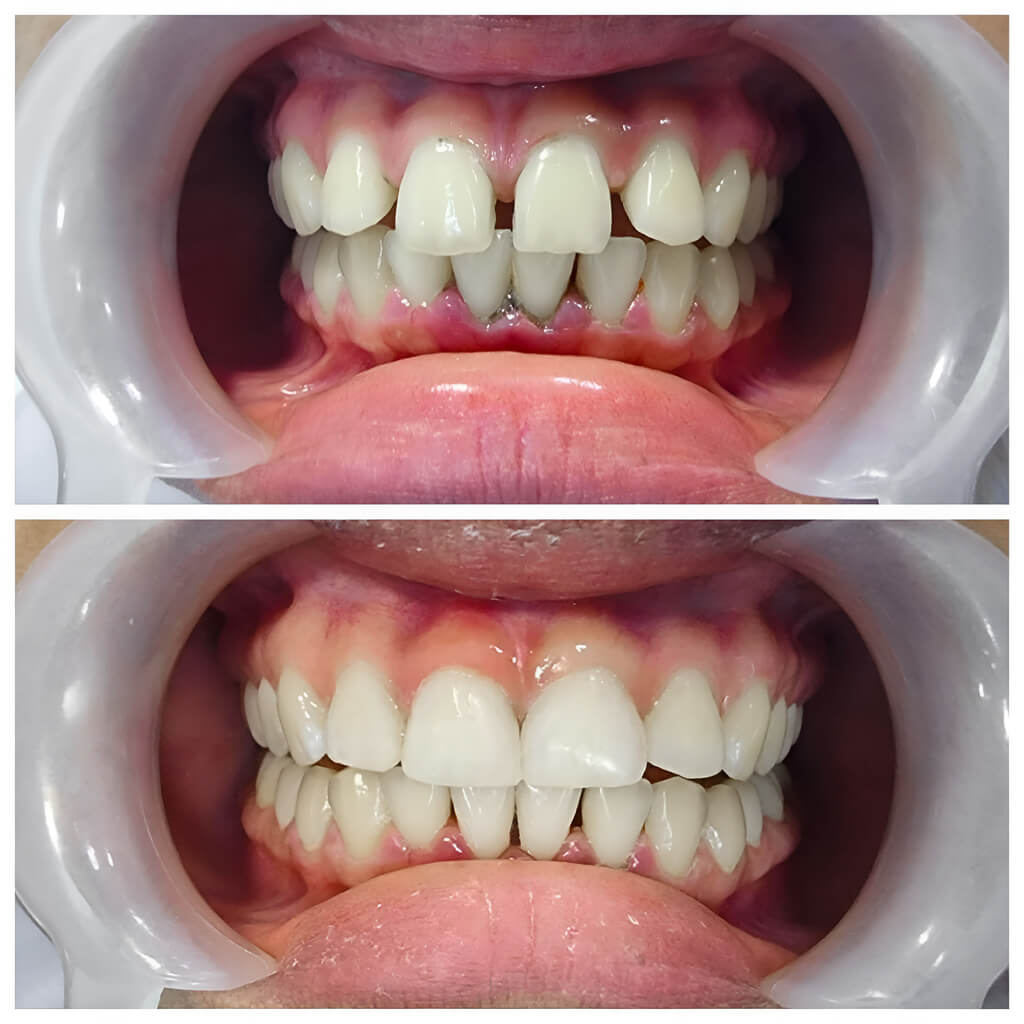
If you are comparing dental bonding vs veneers, you are probably not looking for a textbook answer. You want to know what will actually look good in your mouth, hold up in real life, and feel worth the investment.
That is the right way to think about it. Both dental bonding and veneers can improve the appearance of teeth, but they solve different problems in different ways. One may be the better fit for a chipped tooth, small gaps, or minor imperfections. The other may make more sense if you want a more dramatic smile makeover, stronger stain resistance, or a longer term solution.
In cosmetic dentistry, the best choice is rarely about what is “better” in the abstract. It is about which treatment matches your teeth, bite, habits, budget, and long term expectations. For patients in the San Diego area who want natural-looking smile enhancement, understanding the key differences between bonding and veneers is the first step toward making an informed decision.
Dental bonding vs veneers at a glance
At the simplest level, dental bonding uses a tooth colored composite resin to reshape or repair part of a tooth. Veneers are thin shells that cover the front surface of a tooth to change its color, shape, size, or overall appearance.
That sounds straightforward, but the experience and outcome are not the same. Teeth bonding is often a more affordable solution and can usually be completed in a single visit. Veneers, especially porcelain veneers, generally involve more planning, more precision, and at least two visits. In exchange, veneers tend to offer greater durability, more stain resistant surfaces, and more dramatic aesthetic results.
What is dental bonding?
Dental bonding is a cosmetic dental treatment that uses resin material to repair or refine a tooth. A dentist applies the bonding material directly to the tooth surface, shapes it by hand, hardens it with a curing light, and polishes it so it blends with the surrounding teeth.
Think of dental bonding like detailed sculpting. If a tooth has small chips, minor flaws, uneven spacing, or a worn edge, the composite resin can be shaped to restore a natural look without changing more natural tooth structure than necessary. Because of that, dental bonding is often considered minimally invasive.
What are veneers?
Veneers are custom restorations placed over the front surface of teeth. Porcelain veneers are the most widely known option, though composite veneers also exist. These restorations are designed to improve color, contour, alignment, and symmetry for a more complete smile makeover.
Unlike teeth bonding, veneers are not simply added chairside in a quick sculpting session and sent on their way. Porcelain veneers are carefully designed so they reflect light in a way that resembles natural teeth. That is one reason they are often chosen for patients who want elevated aesthetic results and a highly polished cosmetic dental outcome.
Dental bonding and veneers: the biggest difference
The biggest difference in dental bonding vs veneers is coverage. Dental bonding usually corrects a specific area of a tooth, while veneers cover most or all of the visible front surface. That difference affects everything else: cost, durability, preparation, maintenance, and appearance.
Both dental bonding and veneers can improve minor cosmetic issues, but they do so on different scales. Bonding is often ideal for small chips, small gaps, and minor corrections. Veneers are often better for broader smile enhancement when several front teeth need to be reshaped, brightened, or made more uniform.
When dental bonding may be the better choice
Dental bonding is often a smart option when the issue is limited and the tooth is otherwise healthy. If you have a chipped tooth, tiny spaces between teeth, slight edge wear, or minor imperfections that bother you every time you see a photo of yourself, bonding can be a cost effective and conservative fix.
It is also appealing for patients who want a single visit treatment. In many cases, teeth bonding can be completed without extensive prep, and the dentist can preserve more natural tooth structure. For someone who wants subtle smile enhancement rather than a full smile makeover, dental bonding may feel like the right level of treatment.
When veneers may be the better choice
Veneers may be the better fit when you want a bigger visual change or more consistency across multiple teeth. If your concerns include discoloration that whitening cannot fully correct, uneven tooth shape, worn enamel, uneven spacing, or several cosmetic concerns at once, veneers can create a more unified result.
Porcelain veneers are also often chosen by patients who want a long term solution with a stain resistant surface. Coffee, tea, red wine, and everyday wear tend to be less of a problem with porcelain veneers than with bonding. If desired longevity matters as much as appearance, veneers usually have the edge in bonding vs veneers comparisons.
Appearance: which looks more natural?
This is where the conversation gets interesting. Both bonding and veneers can look beautiful when done well. But they do not achieve that natural appearance in the same way.
Dental bonding relies on the dentist’s ability to layer and shape tooth colored resin so it closely matches the surrounding teeth. For small repairs, this can blend seamlessly and look excellent. Porcelain veneers, however, are known for their light reflecting properties. Because porcelain behaves more like enamel in the way it catches light, veneers can create an especially lifelike natural look, particularly across several visible teeth.
Durability and longevity veneers tend to win
If you are weighing dental bonding vs veneers based on lifespan, veneers usually come out ahead. Bonding is durable, but the resin material is not as strong or as stain resistant as porcelain. Teeth bonding can chip, dull, or discolor over time and may need more frequent touch ups.
Porcelain veneers are generally more durable and better suited for patients who want a long term solution. That does not mean they are indestructible. Biting ice, opening packaging with your teeth, or grinding can damage either option. Still, when patients ask about longevity veneers are usually the stronger answer, especially with proper care.
Cost: bonding is usually the more affordable solution
For many patients, cost plays a major role in bonding vs veneers decisions. Dental bonding is typically the more affordable solution up front. It uses less lab work, often takes less time, and can often be completed in a single visit.
Veneers cost more because the process is more involved. Porcelain veneers are custom made, carefully designed, and placed with precision. While they are less cost effective at the start, they may make sense for patients whose aesthetic goals and desired longevity justify the investment. In other words, bonding is often more budget-friendly now, while veneers may offer better value over a longer timeline.
The bonding process vs the veneer process
The bonding process is usually straightforward. The dentist lightly prepares the tooth surface if needed, applies a conditioning liquid, places the bonding material, shapes the composite resin, cures it with light, and polishes it. In many cases, the appointment begins and ends in the same chair session.
Veneers usually require at least two visits, especially porcelain veneers. During the first visit, the teeth are evaluated, the desired shape is discussed, and a small amount of tooth enamel may be adjusted to make room for the veneer. Impressions or digital scans are taken, and the final veneers are made before placement at a later appointment. That extra planning is part of why veneers can deliver such refined aesthetic results.
How much tooth enamel is removed?
One of the most practical key differences between dental bonding and veneers is how much preparation is needed. Dental bonding often requires little to no removal of tooth enamel, which makes it appealing to patients who want to preserve as much natural tooth structure as possible.
Veneers, especially porcelain veneers, usually require some reshaping of the natural tooth structure so the restoration sits naturally and does not look bulky. That does not mean veneers are excessive or aggressive by default. It simply means they involve a more committed change to the tooth structure than many teeth bonding cases do.
Stains, shine, and upkeep
Bonding and veneers do not age the same way. Composite resin can pick up stains over time, especially if you smoke or drink a lot of coffee, tea, or red wine. It can also lose some of its polish and may need touch ups to keep the same level of brightness.
Porcelain veneers are more stain resistant and tend to maintain their gloss better. That is one reason many patients pursuing a smile makeover prefer porcelain or composite resin options only after discussing the tradeoffs carefully. If keeping a bright, polished smile with less frequent touch ups matters to you, veneers may be the better fit.
What issues can both dental bonding and veneers fix?
Both dental bonding and veneers can improve minor imperfections, but the scope differs. Both dental bonding and veneers may be used for small chips, a chipped tooth, minor flaws, uneven edges, small gaps, and shape corrections. Both can also help teeth appear more balanced and harmonious with other teeth.
Where the choice becomes more specific is scale. If the problem is isolated, bonding may be enough. If the smile has several dental issues spread across multiple visible teeth, veneers often create a more cohesive smile enhancement. A cosmetic dentist will look at your bite, enamel, spacing, and goals before recommending the most suitable treatment plan.
Are composite veneers the same as bonding?
Not exactly, though people often lump them together. Composite veneers use composite resin too, but they are designed to cover more of the front surface than a small bonding repair. You can think of composite bonding as targeted sculpting and composite veneers as broader cosmetic coverage.
This matters because patients searching bonding vs veneers are sometimes actually deciding between direct bonding and porcelain veneers, while others are comparing composite veneers to porcelain veneers. The materials may overlap, but the design goals and durability can be quite different.
What if your teeth are crooked or crowded?
Sometimes the real issue is not color or shape but alignment. If your teeth have uneven spacing or crowding, adding bonding or veneers without addressing the underlying position may not be the most suitable treatment plan.
In some cases, orthodontic treatment first can create a better foundation for cosmetic work later. For patients with mild spacing or alignment concerns, SureSmile clear aligners may be worth discussing before committing to bonding and veneers. Straightening first can make cosmetic treatment more conservative and more natural-looking.
Maintenance matters more than people think
No cosmetic dental treatment is truly “set it and forget it.” Whether you choose dental bonding or veneers, proper care affects how long the results last and how natural they continue to look.
That means good oral hygiene practices, brushing gently, floss regularly, and avoiding habits that put pressure on the front teeth. It also means regular dental checkups so your dentist can monitor the tooth underneath, the edges of the restoration, and the health of the surrounding teeth and gums. If you are investing in your smile, maintenance is part of protecting that investment. Staying current with a regular dental check up helps catch small problems before they become expensive ones.
Dental bonding vs veneers for a smile makeover
If your goal is a subtle tweak, dental bonding may be all you need. If your goal is a more dramatic smile makeover, veneers may offer the consistency and polish you are after. This is where aesthetic goals matter more than trends.
A person with one chipped tooth and healthy enamel may not need veneers at all. Another person with discoloration, shape issues, and wear across multiple front teeth may find that bonding would only be a temporary patchwork. In dental bonding vs veneers decisions, the right answer depends on the scale of change you want and the long term expectations you have.
Questions to ask before choosing bonding and veneers
Before moving forward, ask practical questions, not just aesthetic ones. How long do you want the result to last? Are you looking for a cost effective improvement or a long term solution? Are your concerns limited to minor cosmetic issues, or do you want a full smile makeover?
Also ask how the treatment will affect your natural teeth. Will any tooth enamel need to be removed? Will the restoration blend seamlessly with the surrounding teeth? How likely are more frequent touch ups? These questions help turn a cosmetic wish into an informed decision.
The role of planning in cosmetic dentistry
Good cosmetic dentistry is not just about making teeth whiter or straighter-looking. It is about proportion, bite, facial balance, and preserving healthy tooth structure whenever possible. The best outcomes happen when the treatment fits the person instead of forcing every smile into the same template.
That is especially true when comparing dental bonding and veneers. Some patients benefit from one or two small bonding repairs. Others need a more comprehensive plan using veneers and digital design. If you are exploring larger aesthetic changes, advanced digital techniques for smile reconstruction can help map out what will look natural before treatment begins.
So, which one is right for you?
In the dental bonding vs veneers debate, there is no universal winner. Bonding is often the more affordable solution, more conservative, and ideal for minor corrections. Veneers are often more durable, more stain resistant, and better suited for a complete smile makeover.
If you want a quick fix for small chips, small gaps, or minor flaws, dental bonding may be the smarter move. If you want a more dramatic transformation with stronger long term performance, veneers may be the better investment. For many patients, the answer comes down to balancing budget, desired longevity, and aesthetic goals.
The best next step is not guessing from photos online. It is having a cosmetic dentist evaluate your teeth, explain the key differences clearly, and recommend the most suitable treatment plan for your smile, not someone else’s. If veneers are part of that conversation, you can also explore more about custom veneer treatment options here.