


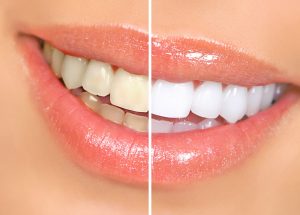
Many factors can influence the color of your teeth. While plaque and surface stains play a role, other causes are often behind tooth discoloration. Certain foods and drinks, tobacco use, medications, and even injuries can all change the color of your teeth over time.
Understanding the reason for your discoloration is key to choosing the right treatment and achieving a brighter, longer-lasting result.
How Teeth Whiteners Work
Teeth-whitening products work using bleach, usually hydrogen peroxide or carbamide peroxide, which breaks up stains and makes them less visible, brightening your smile. However, whitening treatments don’t affect all teeth equally, so it’s important to talk with us before starting any bleaching process.
Keep in mind that whitening will not work on crowns, veneers, caps, or fillings that were made to match your natural tooth color. Certain medications or injuries can also cause discoloration that doesn’t respond to bleach.
There are several ways to whiten your teeth, including specialized toothpastes, at-home bleaching kits, and the professional in-office treatments that we offer. Each method differs in how it works, how effective it is, and how safe it is for your teeth, so consulting with us first is the best way to choose the right approach.
Some whitening products can temporarily increase sensitivity in teeth and gums. This usually goes away on its own, but overuse can lead to lasting enamel damage. If you notice ongoing discomfort, you should schedule an appointment with us promptly.